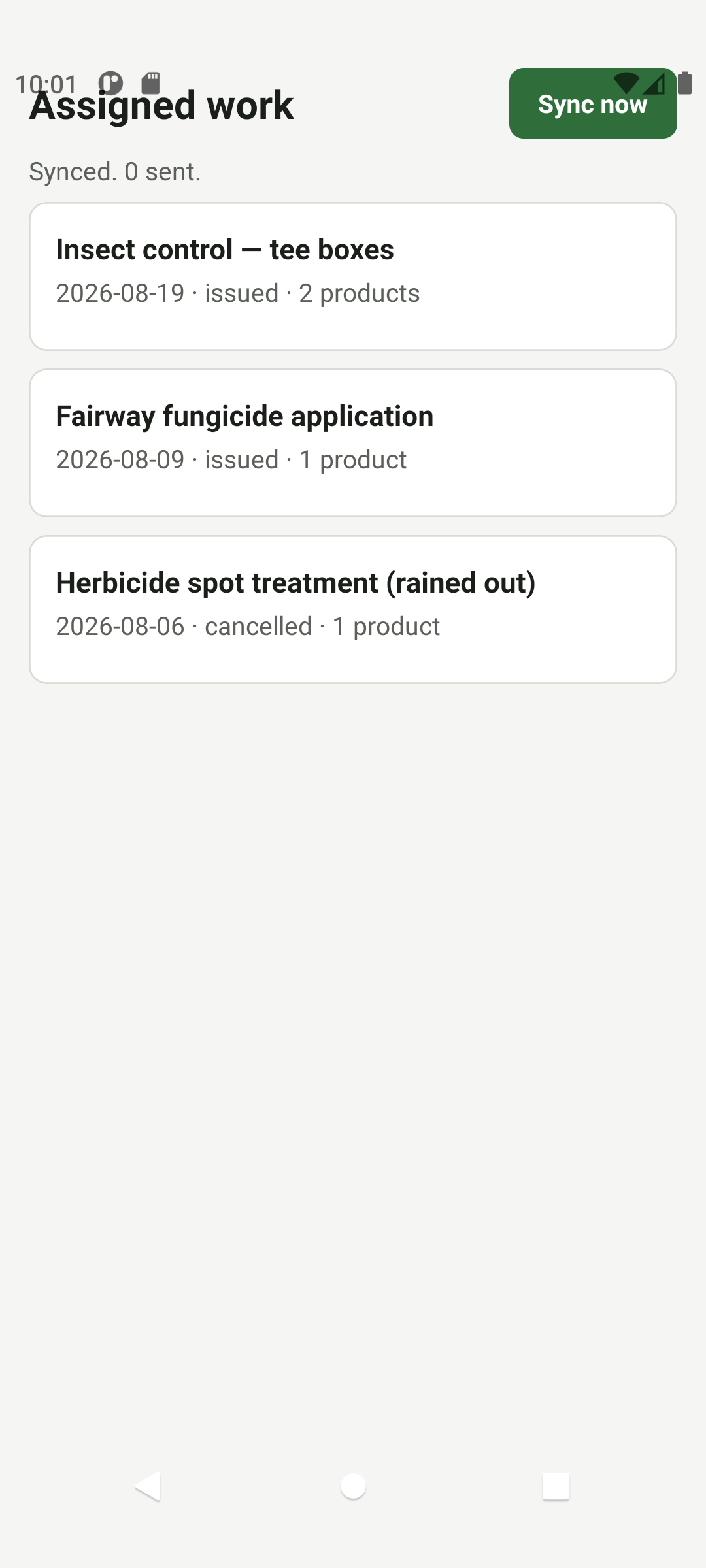
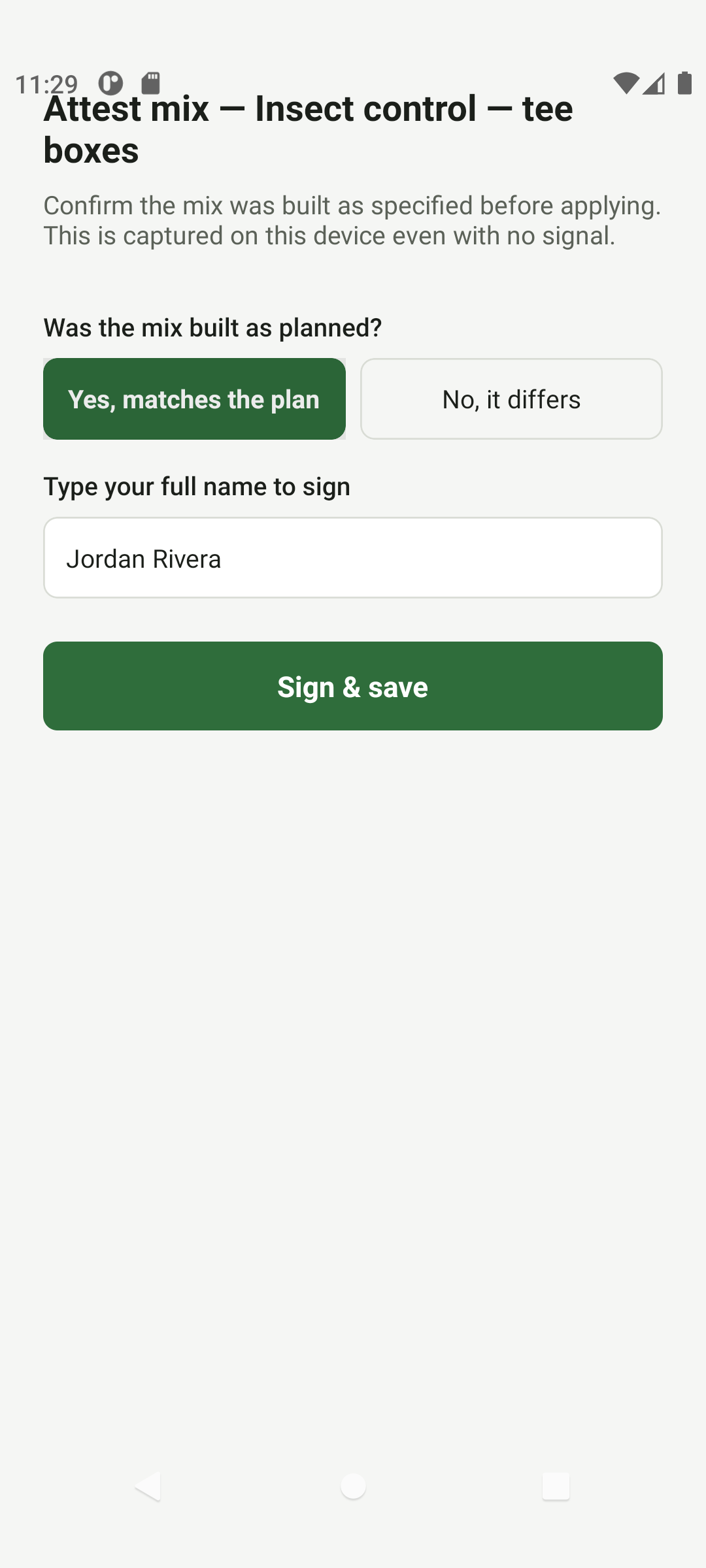
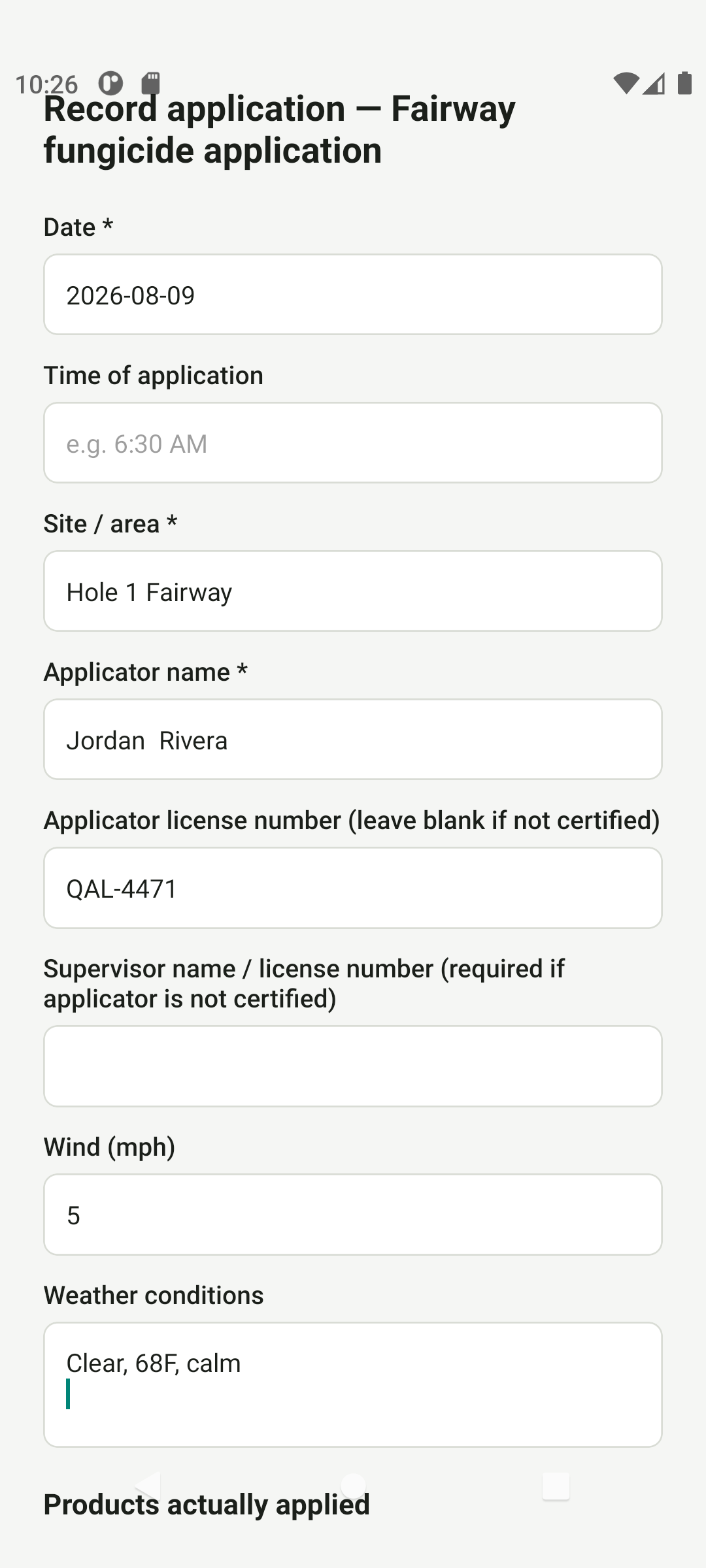
Spray plan building & rate math
Pick the areas you're targeting on a property, add products from the catalog, and Verdaris computes the per-tank amount from each product's own rate and the target area — no spreadsheet, no manual math. Print the result as a work order for the crew.
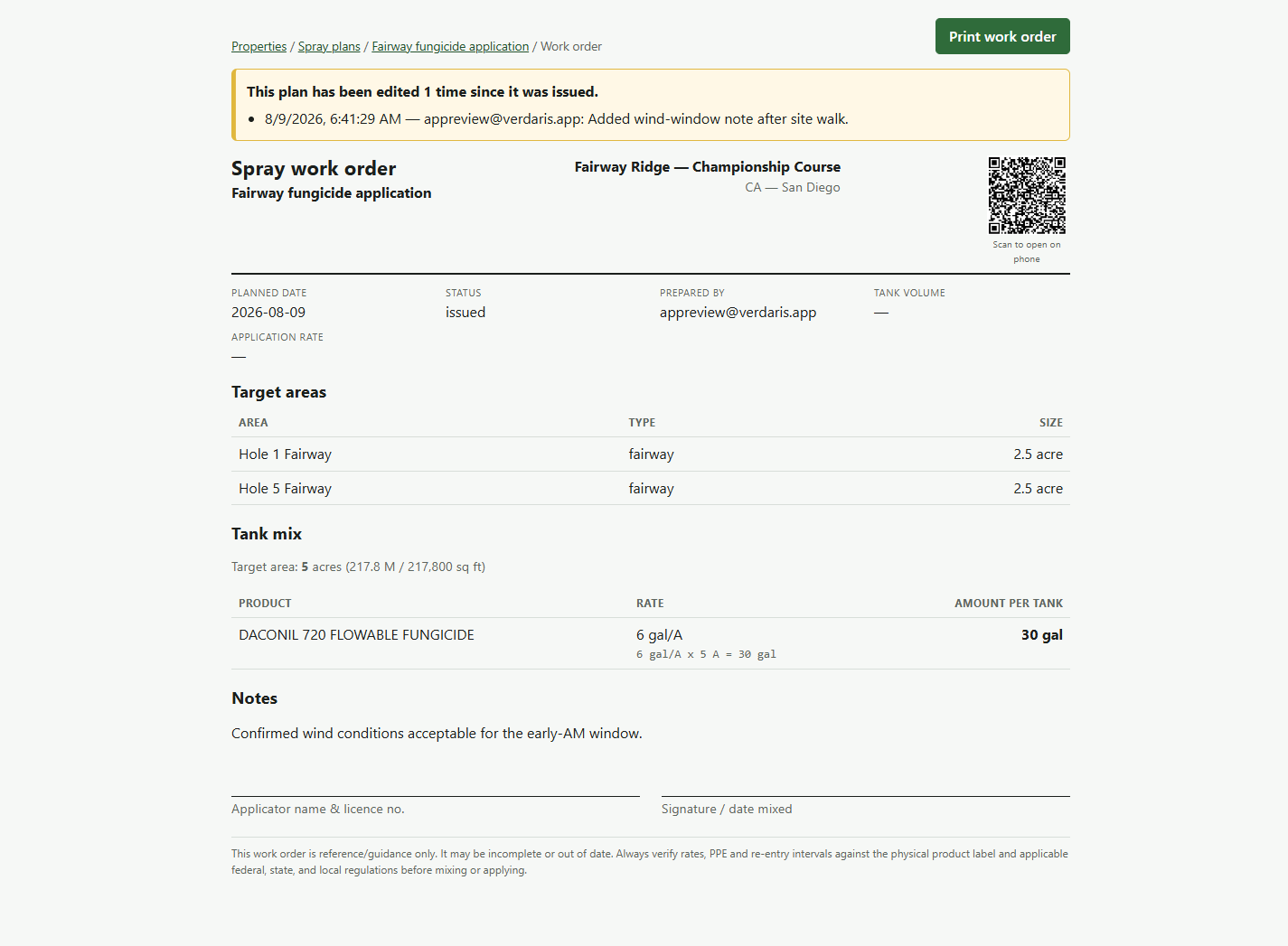
An audit trail, not just a form (ADR-010)
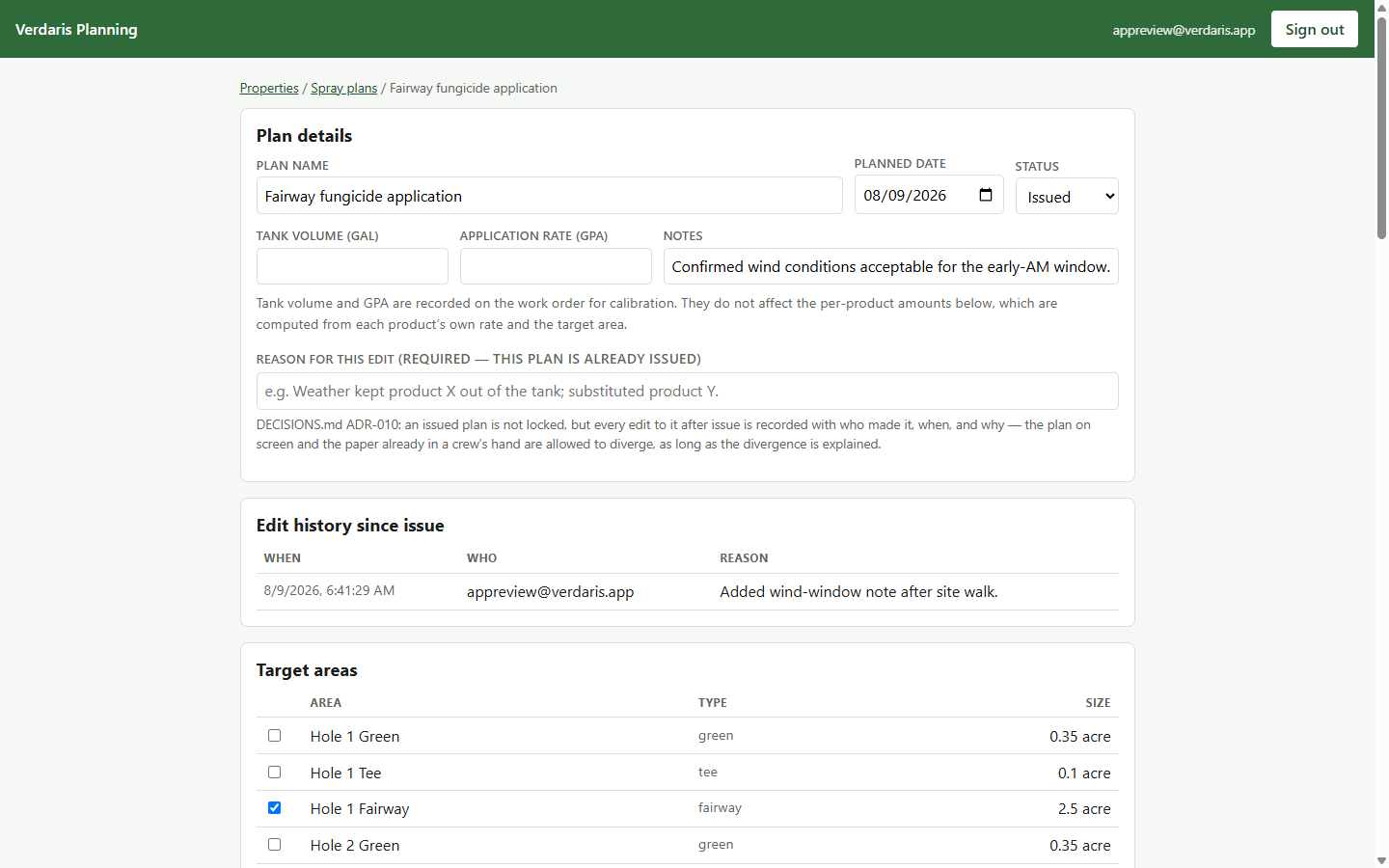
An issued plan isn't locked — field conditions change. But every edit made after issue is recorded with who made it, when, and why, right on the plan. The plan on screen and the paper already in a crew's hand are allowed to diverge, as long as the divergence is explained and visible.
Inventory that warns you before you're caught short
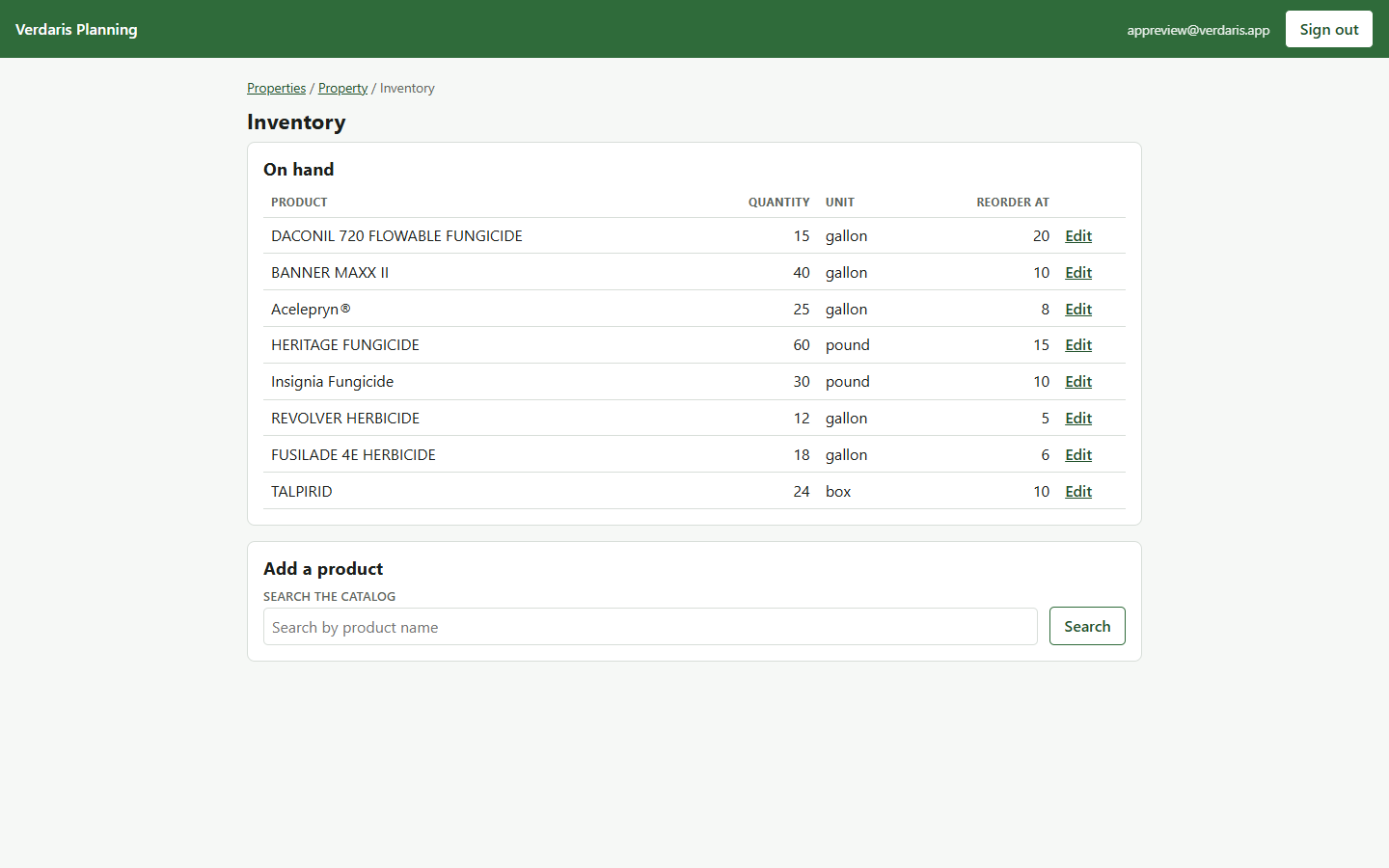
Track on-hand quantity and a reorder threshold per product. The plan builder surfaces a shortfall warning inline the moment a plan would draw a product below its threshold — before the crew is standing at an empty shelf.
A property calendar for multi-day planning
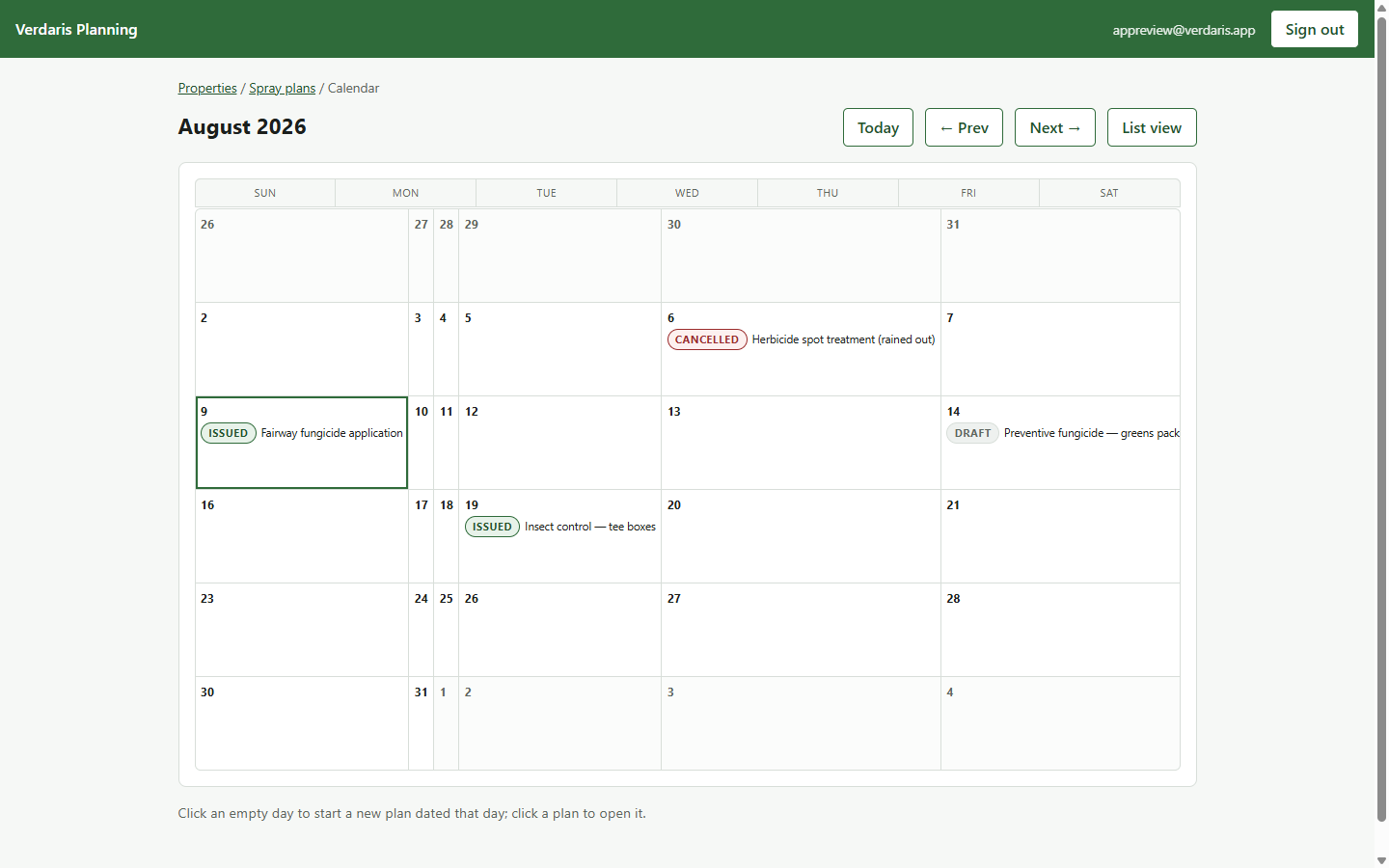
See every plan — draft, issued, cancelled — laid out by date, so scheduling a week of applications across a property is a glance, not a spreadsheet.
An owner admin console
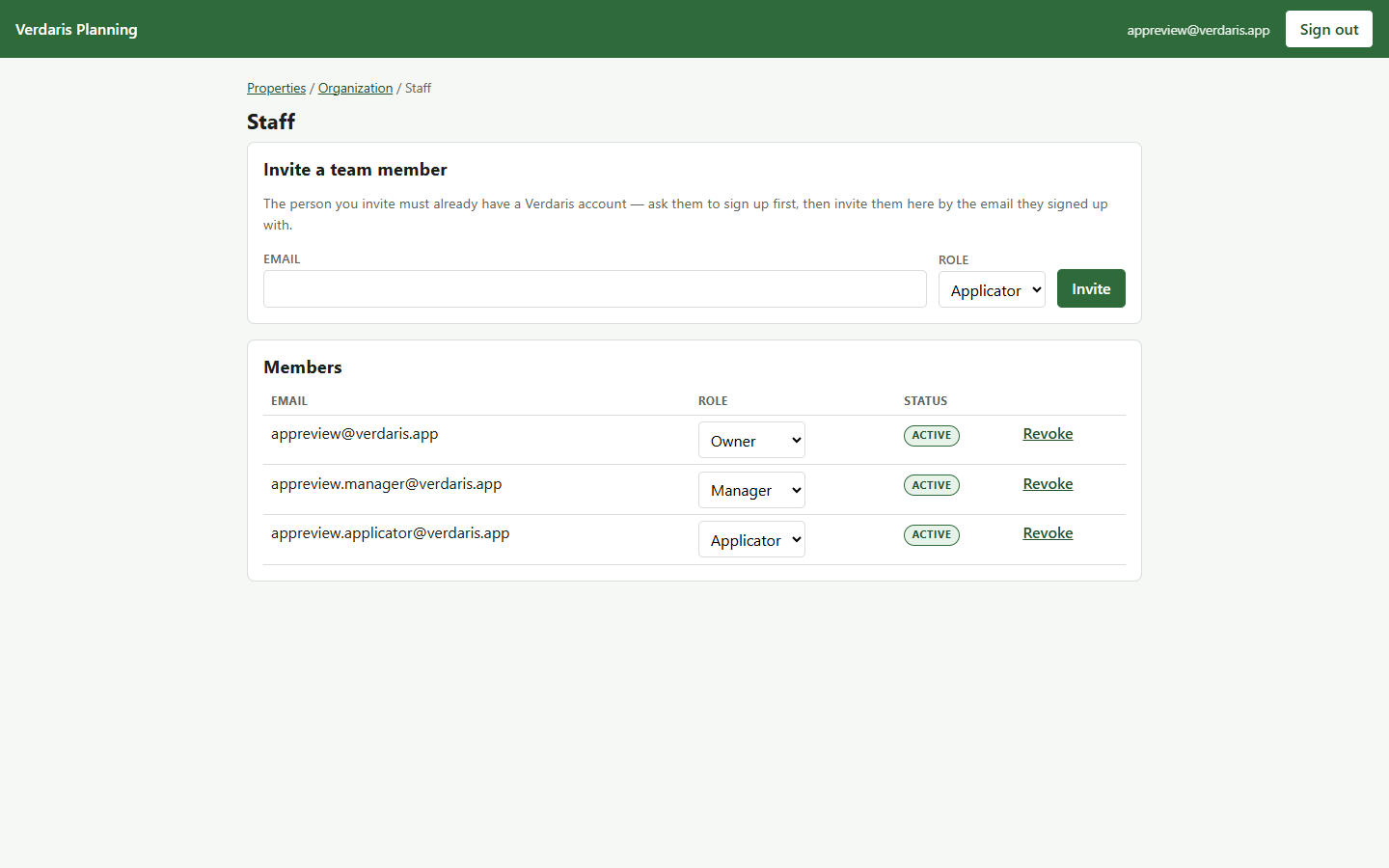
Manage your organization's properties, areas, inventory, and staff from one place — org owners and managers get full CRUD control, not just a read-only view.
A monthly compliance report
Generate a downloadable PDF compliance report summarizing a property's applications for the month — the kind of record a regulator or an internal audit actually wants to see, not a raw data export.